Kaizenly
TL;DR
Kaizenly is a toolkit for people who want to work on something specific instead of reading another book about it. It has 154 assessments, frameworks, and practices, organized so you can find the one that fits where you are right now.
Fun Fact
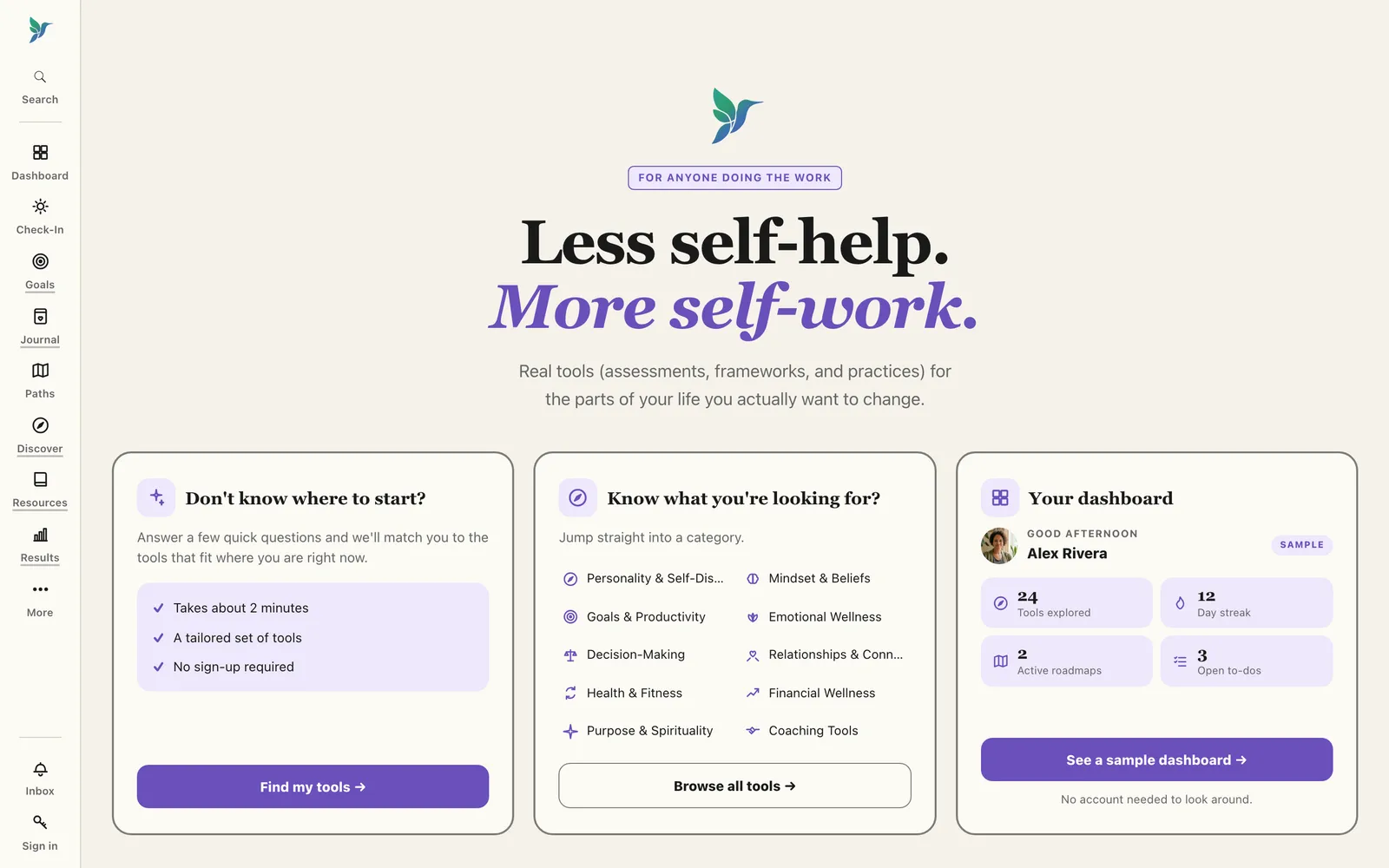
The tagline sums up the whole product in four words: "Less self-help. More self-work."
Less self-help, more self-work
Most personal development stops at the reading. Kaizenly starts after it. The idea is that you already know roughly what you'd like to change, and what's missing is something concrete to do about it this week.
So the basic unit is a tool instead of an article: an assessment that tells you something you didn't know, a framework that gives a decision some structure, or a practice you repeat until it sticks.
154 tools, and a way to find the right one
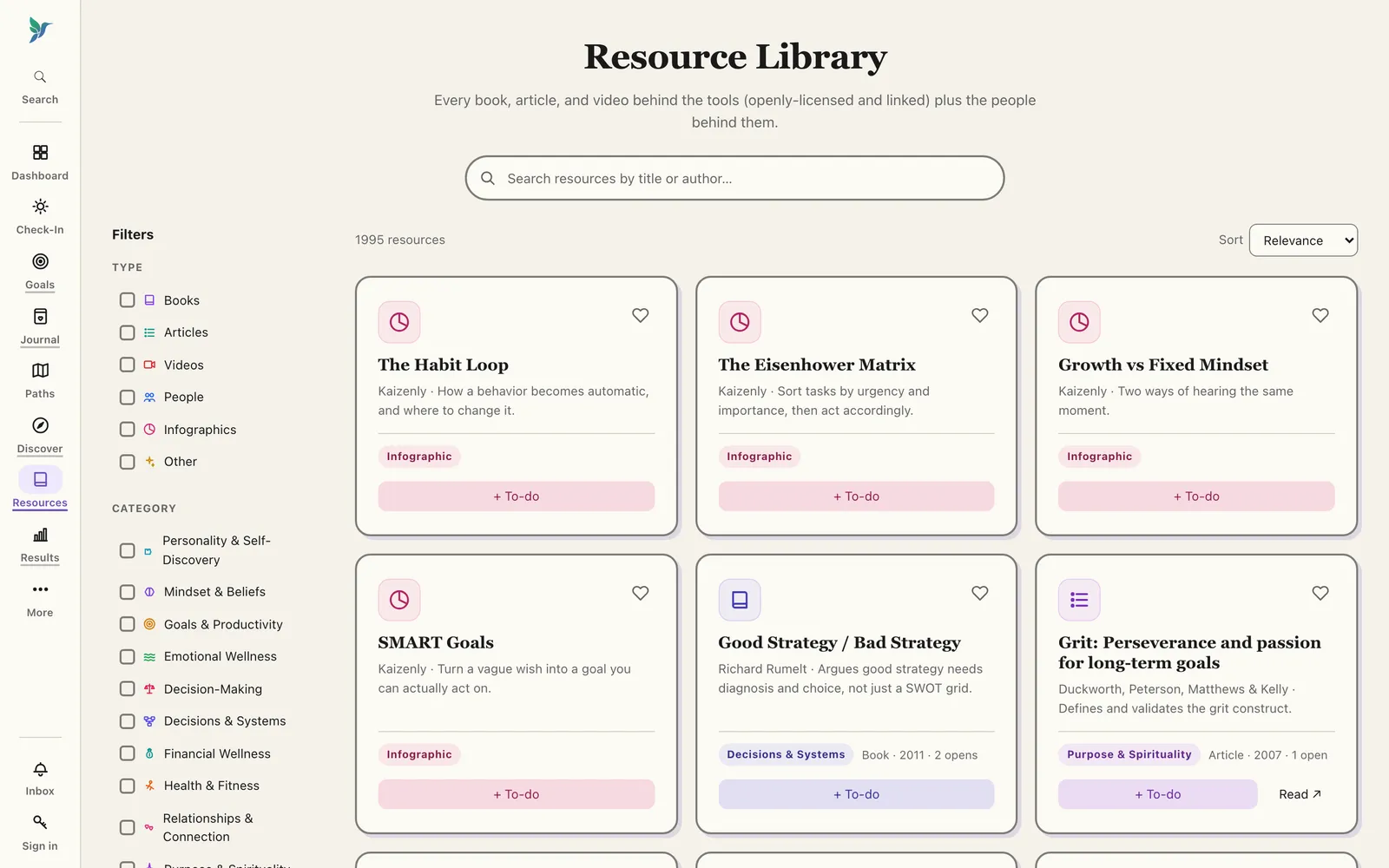
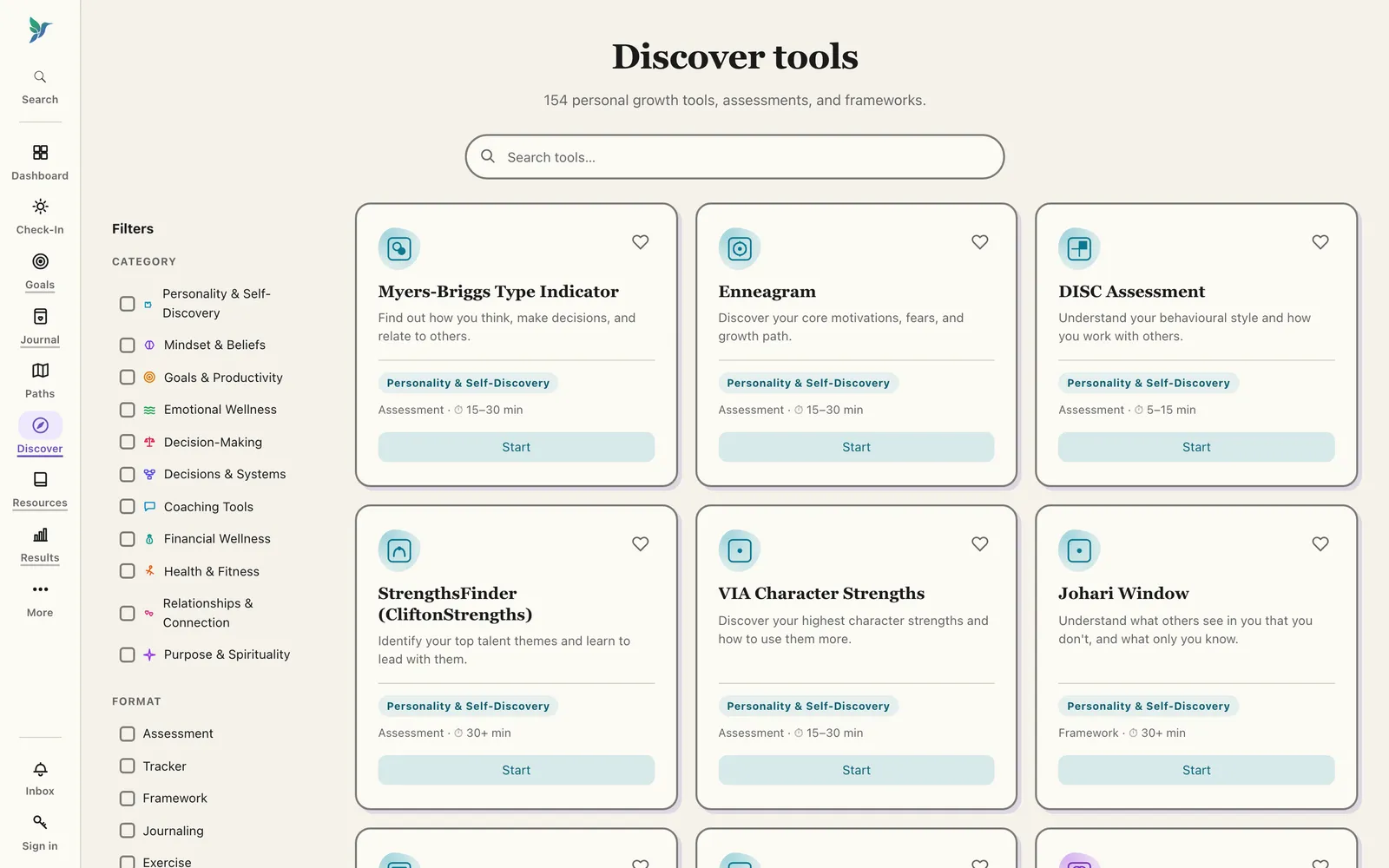
The library is the center of the product. Tools are filed by category (Personality & Self-Discovery, Mindset & Beliefs, Goals & Productivity, Emotional Wellness, Decision-Making, Relationships & Connection, Health & Fitness, Financial Wellness, Purpose & Spirituality, and Coaching Tools) and by format. You can look for an assessment when you want to learn about yourself, or a tracker when you want to build a habit.
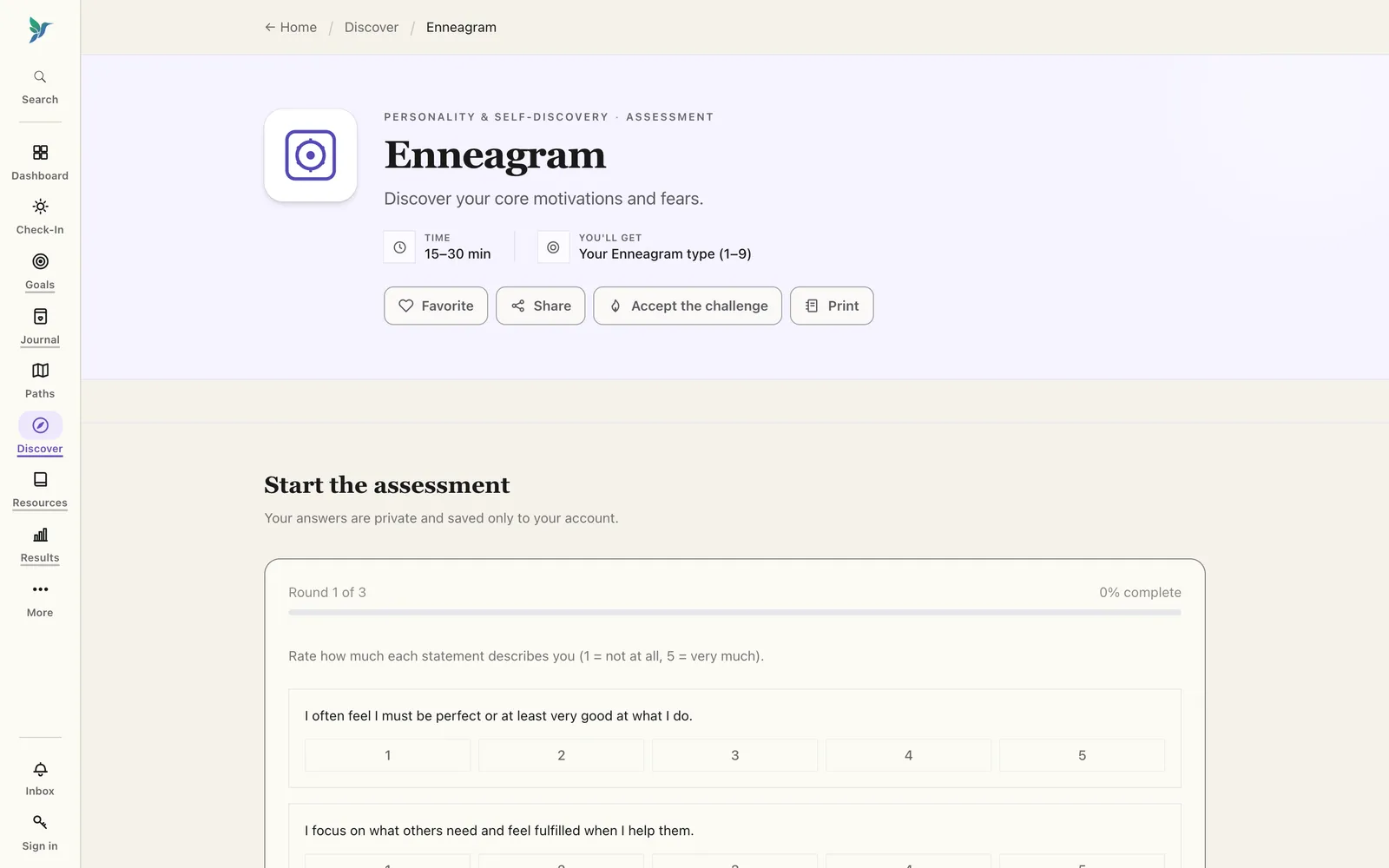
The names are ones people already recognize: Myers-Briggs, Enneagram, DISC, CliftonStrengths, VIA Character Strengths, and the Johari Window. Each one lists how long it takes, because knowing something takes 15 to 30 minutes is often the difference between starting it and bookmarking it forever.
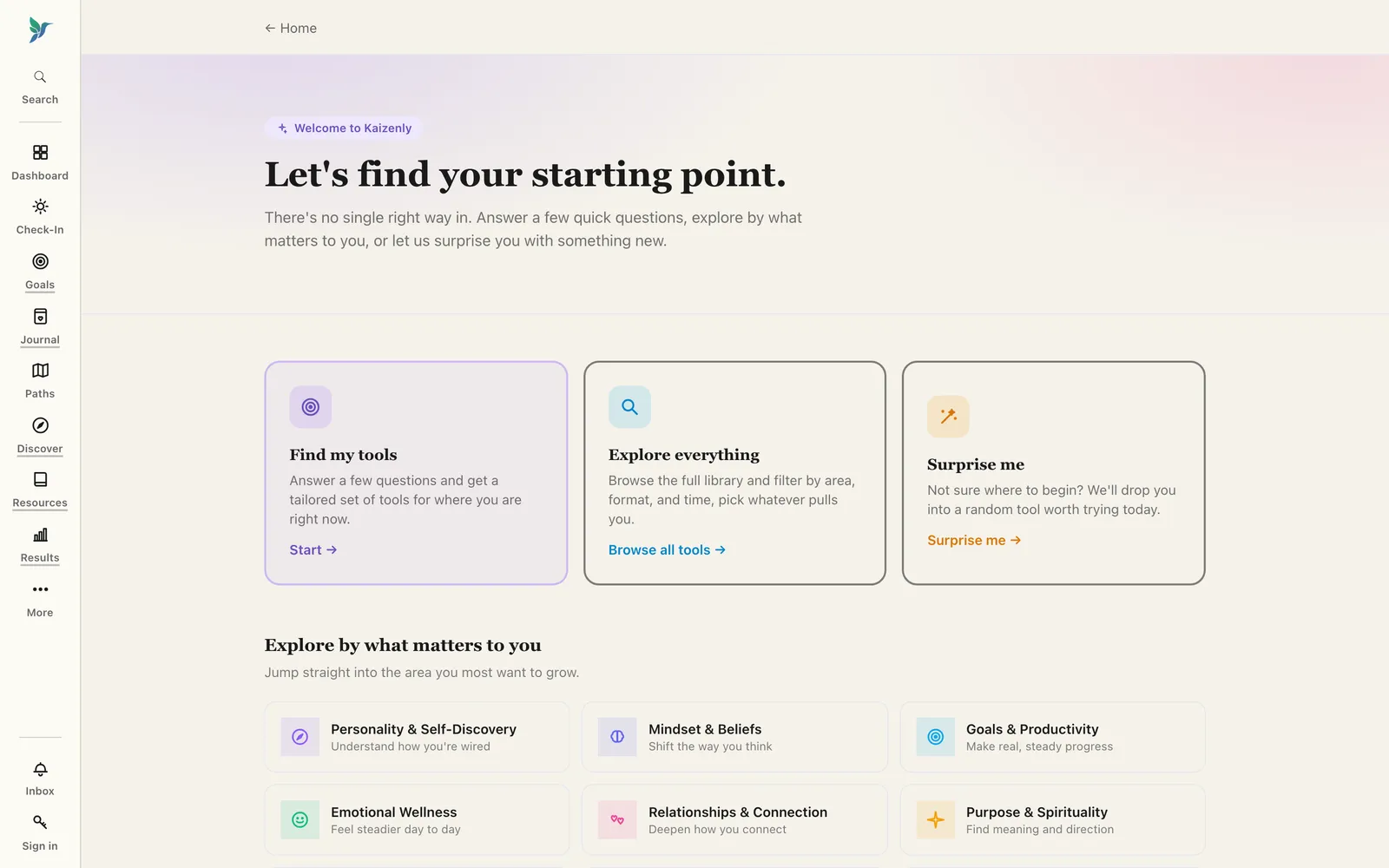
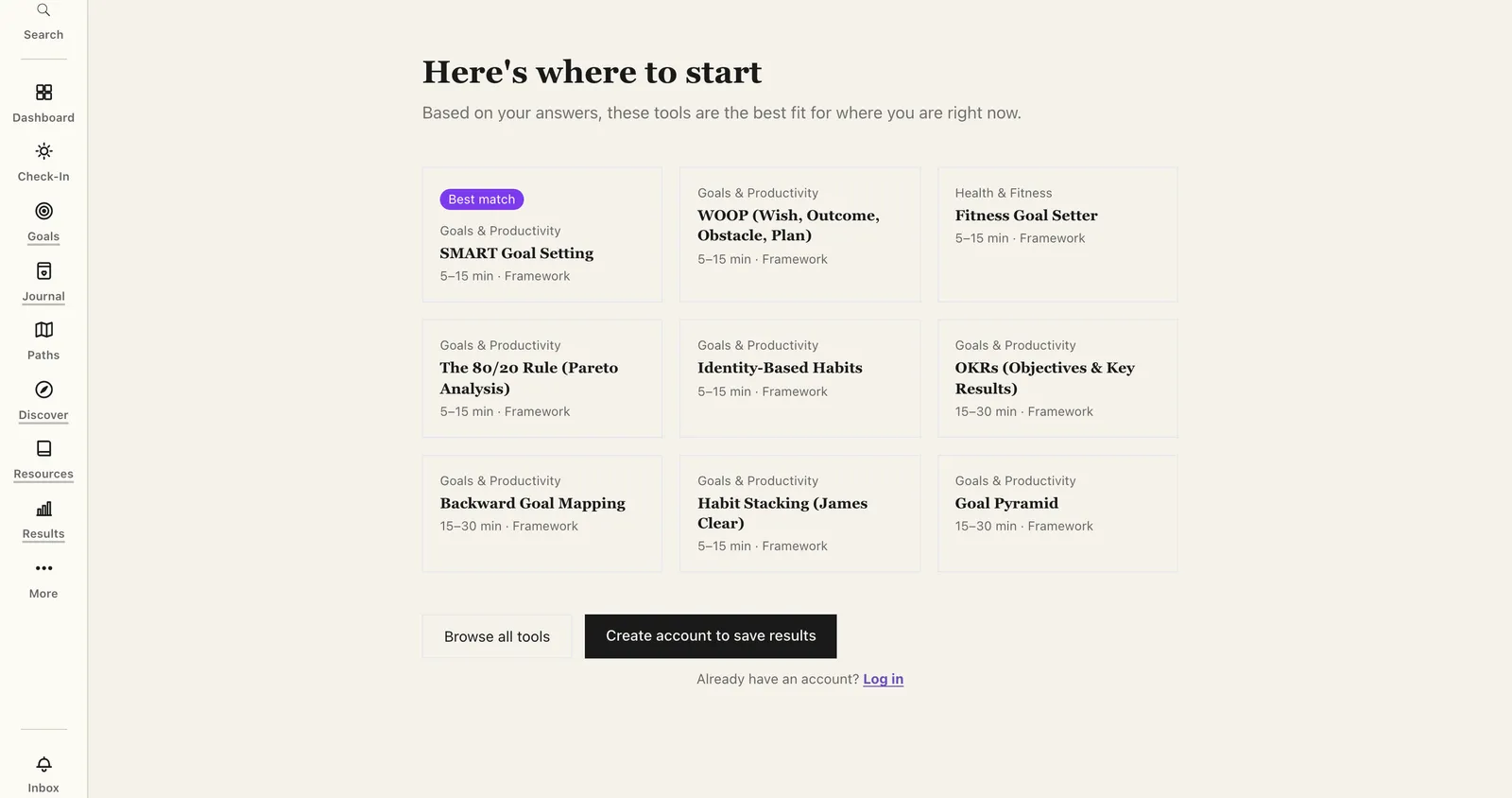
A two-minute quiz covers the more common case: knowing something is off without knowing which tool will help.
Paths, for when one tool isn't enough
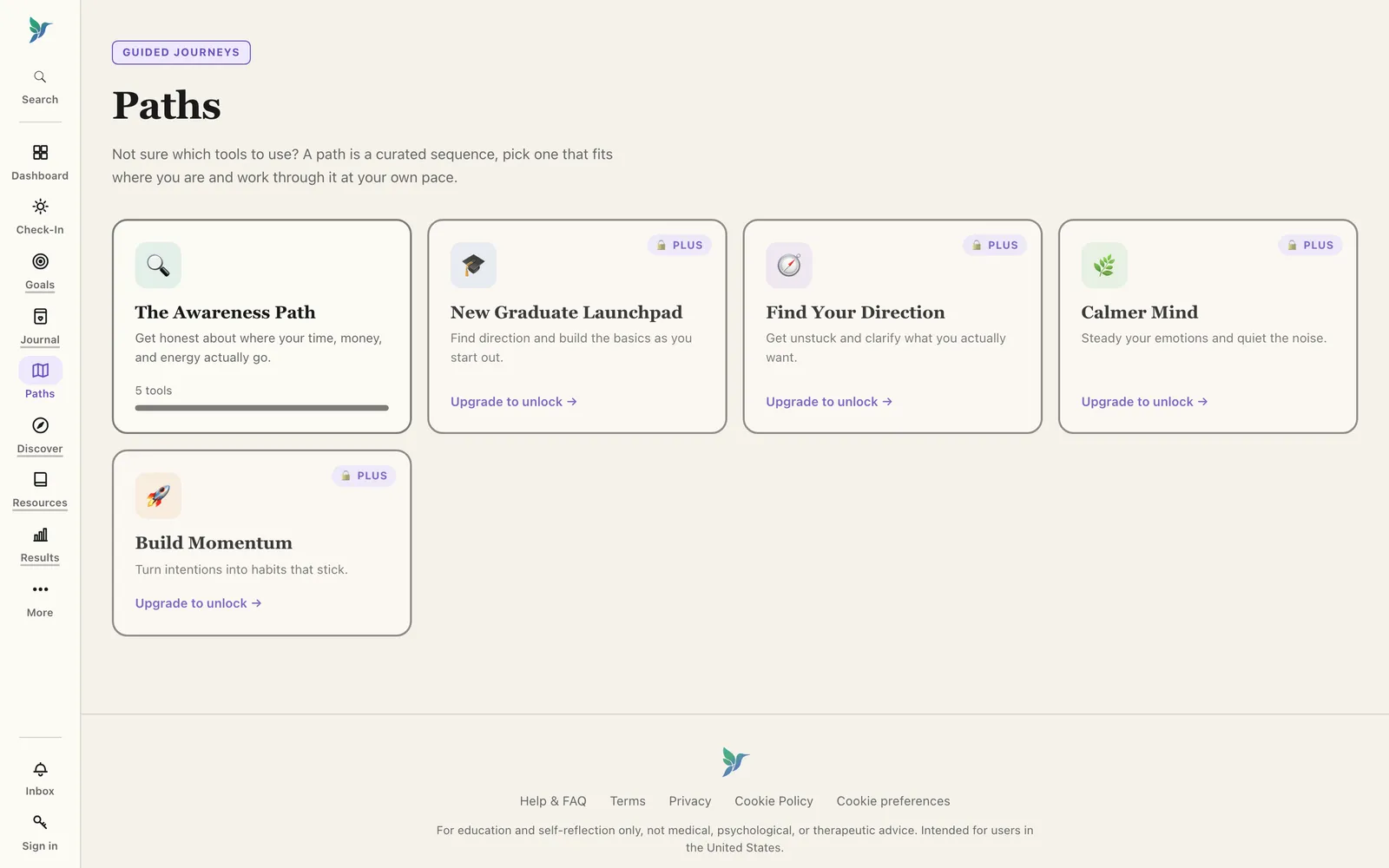
Some things don't get resolved in a single sitting. Paths string tools together into a sequence you work through over time, so the product can help with "I want to get better at this" as well as "give me a worksheet."
Following through
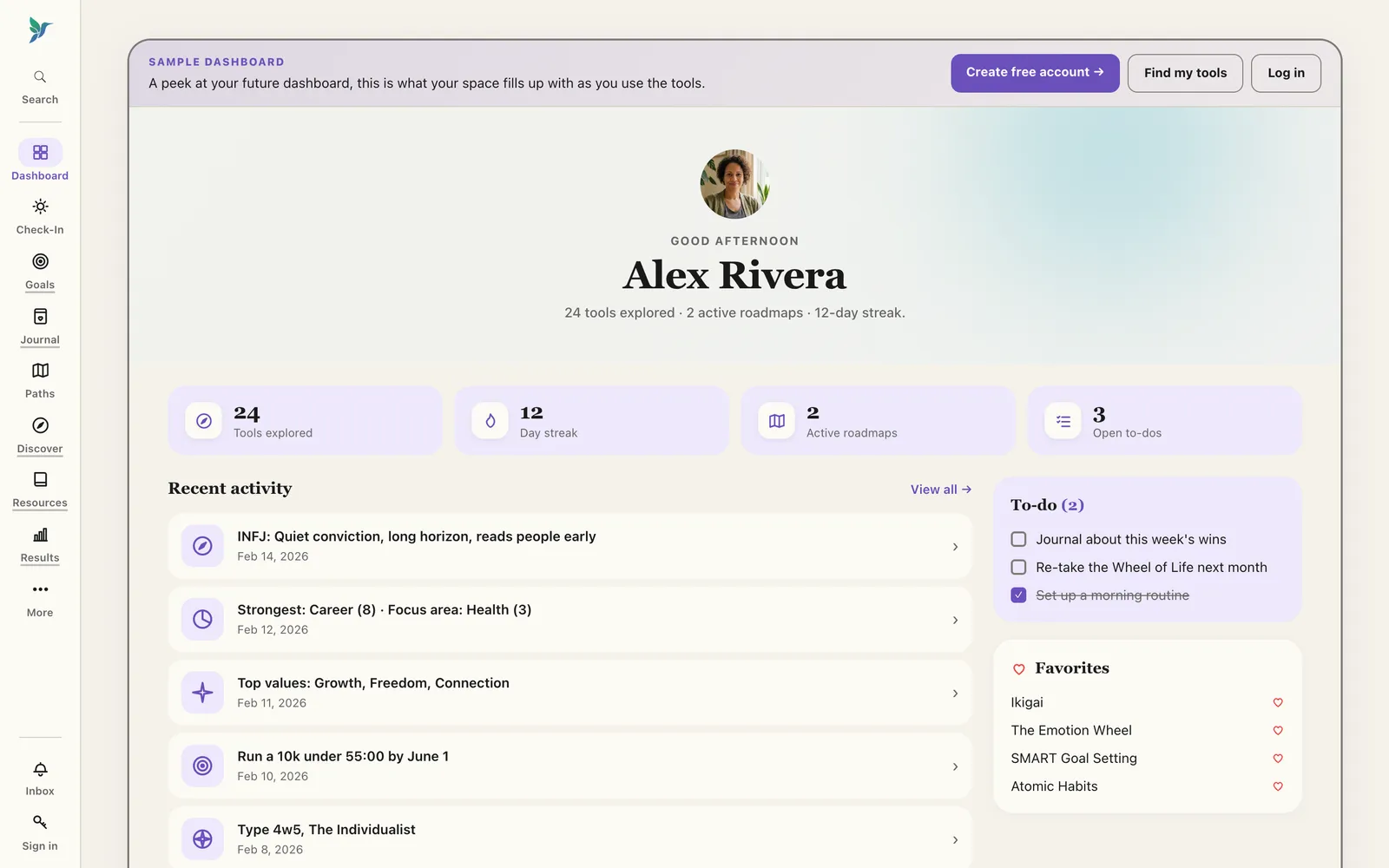
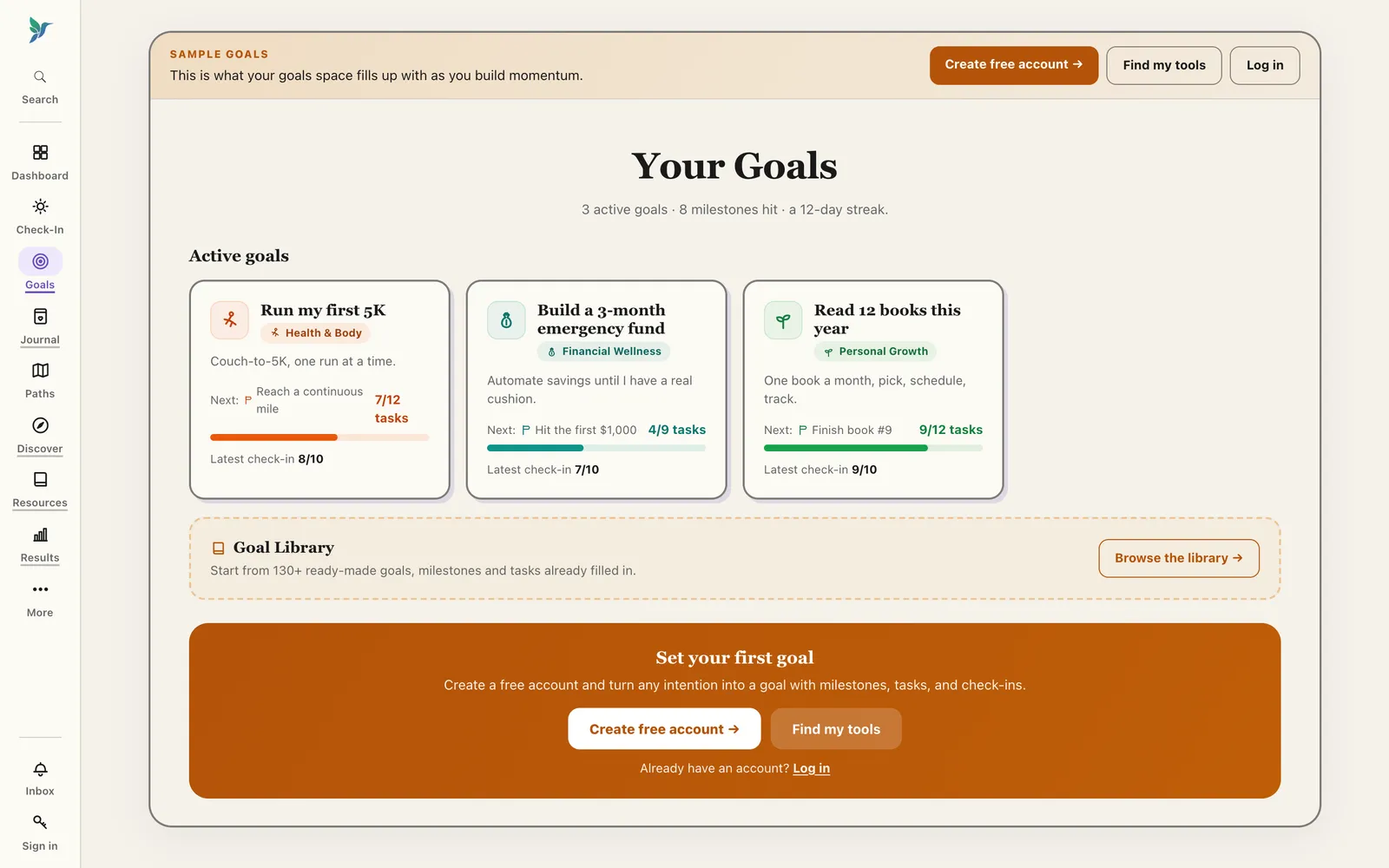
Around the library are the everyday features that help you follow through: a dashboard, a daily check-in, goals, a journal, and results you can look back on. You can see a sample dashboard without creating an account. Asking people to sign up before they've seen anything is how most of these products lose them.